
Detailed Overview
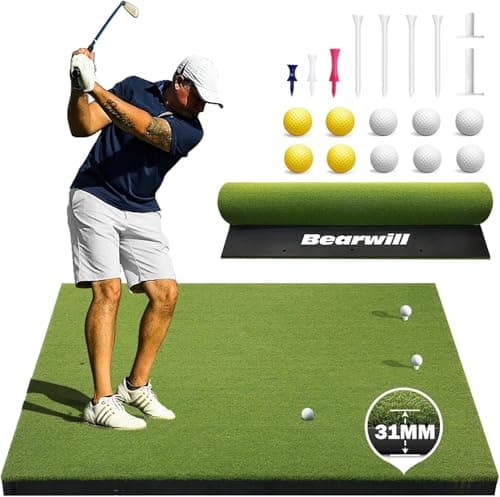
In a home simulator build, the mat is the anchor point that everything else gets measured against: launch monitor placement, net or screen distance, and stance alignment all reference where the ball sits on the turf. At 5 feet by 4 feet, this mat gives enough lateral and front-to-back room to accommodate a normal stance and follow-through without the ball position creeping toward the edge, which matters more in an enclosure than it does hitting into open space. Because it ships as a single piece rather than interlocking tiles, there's no seam alignment to fuss over when squaring it up to a screen or projector image. The green turf tone also reads more like an actual playing surface on camera or through a projected image than some of the darker mats on the market, which is a small but real detail once it's sitting inside an enclosure people look at daily. Given its footprint and construction, it's best treated as a semi-permanent fixture rather than something rolled out and put away each session, so it works best in a dedicated space like a garage bay or basement corner already earmarked for simulator use, positioned once and left in place under the launch monitor and screen.
Specifications Explained
The numbers worth paying attention to here are the mat's thickness and weight, since those two figures tell you more about daily practicality than the overall footprint does. Weight matters too. At just over 16 pounds, one person can carry it out to a garage or basement setup, roll it flat, and put it away again without needing help or specialist storage. That's a meaningful consideration if the mat won't have a permanent home and needs to come out only for practice sessions. Length and width, given in inches here, simply confirm the same footprint described elsewhere on this page, so measure your available space against those figures directly rather than guessing from the mat's general size category.
Real-World Considerations
Two practical caveats are worth flagging before you commit floor space to this mat. First, the footprint itself is a real consideration: at 5 by 4 feet, it needs a dedicated stretch of garage, basement, or spare room, and reviewers who tested it in tighter quarters found it crowded or awkward to store flat when not in use. If your practice area is small, measure twice before buying.
Second, the durability picture, while generally positive in editorial testing, isn't backed by a deep well of independent customer feedback yet. The community sentiment around long-term wear is thinner than for some longer-established competitors, so headline durability numbers should be treated as promising rather than fully proven. Anyone using it heavily may want to periodically shift their strike zone, since concentrated impact areas are where wear tends to show first on turf mats generally. Reasonable expectations, not blind trust in specs, will serve you best here.
Alternatives Worth Considering
The research pulled together for this page doesn't include specific competing mats, so I can't name a direct rival with confidence or compare its specs point by point. What the evidence does support is who this Bearwill mat suits and who it doesn't. Given its size and thickness, it's built for a semi-permanent setup rather than something you tuck away daily, so anyone short on space or wanting a grab-and-go option should look at smaller, thinner mats instead, even if that means giving up some of the simulator-grade feel this one offers. At $89.99, it also sits in a specific price bracket: buyers wanting something cheaper for occasional chipping practice, or those wanting a premium mat with a bigger reputation behind it, should treat that as their deciding factor rather than assuming this is the only sensible pick.
Buying Advice
If you're on hard flooring, indoor use is fine, and it reportedly plays nicely with simulators and launch monitors, so it's worth considering if you're building a home setup around a launch monitor rather than just chipping into a net. Some reviewers question whether it holds up to genuinely heavy daily swing counts long-term, so if you're a high-volume practicer, weigh that uncertainty against the $89.99 price. Check current stock on Amazon before deciding.
Considering it? Check the price of Bearwill Golf Mat 31mm, 5ft x 4ft Premium Golf Hitting Mat Outdoor Indoor
$122.76 on Amazon
Frequently Asked Questions
How long does it take for the mat to fully flatten after being unrolled?
Editorial testers describe it as relatively lightweight for its footprint and quick to roll out, so it settles into a flat, usable surface in short order rather than needing days under weight to cure.
Editorial Verdict
For anyone practicing full swings at home, this mat earns its recommendation mainly on value: it reportedly combines fairway-like feedback with durability claims that suggest it can handle sustained use from drivers through wedges, all at a price below premium alternatives. The generous 5 ft x 4 ft surface accommodates a complete bag and full swings, and setup is straightforward since the mat is light enough to roll out and store without hassle. The tradeoffs are real, though: that same footprint demands dedicated floor space, which rules it out for cramped rooms, and some sources caution that turf in the strike zone may compress with heavy repeated use, so rotating your hitting spot is worth doing. Given a smaller review base than some rivals, treat durability claims as promising rather than proven. If you have the room and want realistic feel on a budget, it's a sound pick.