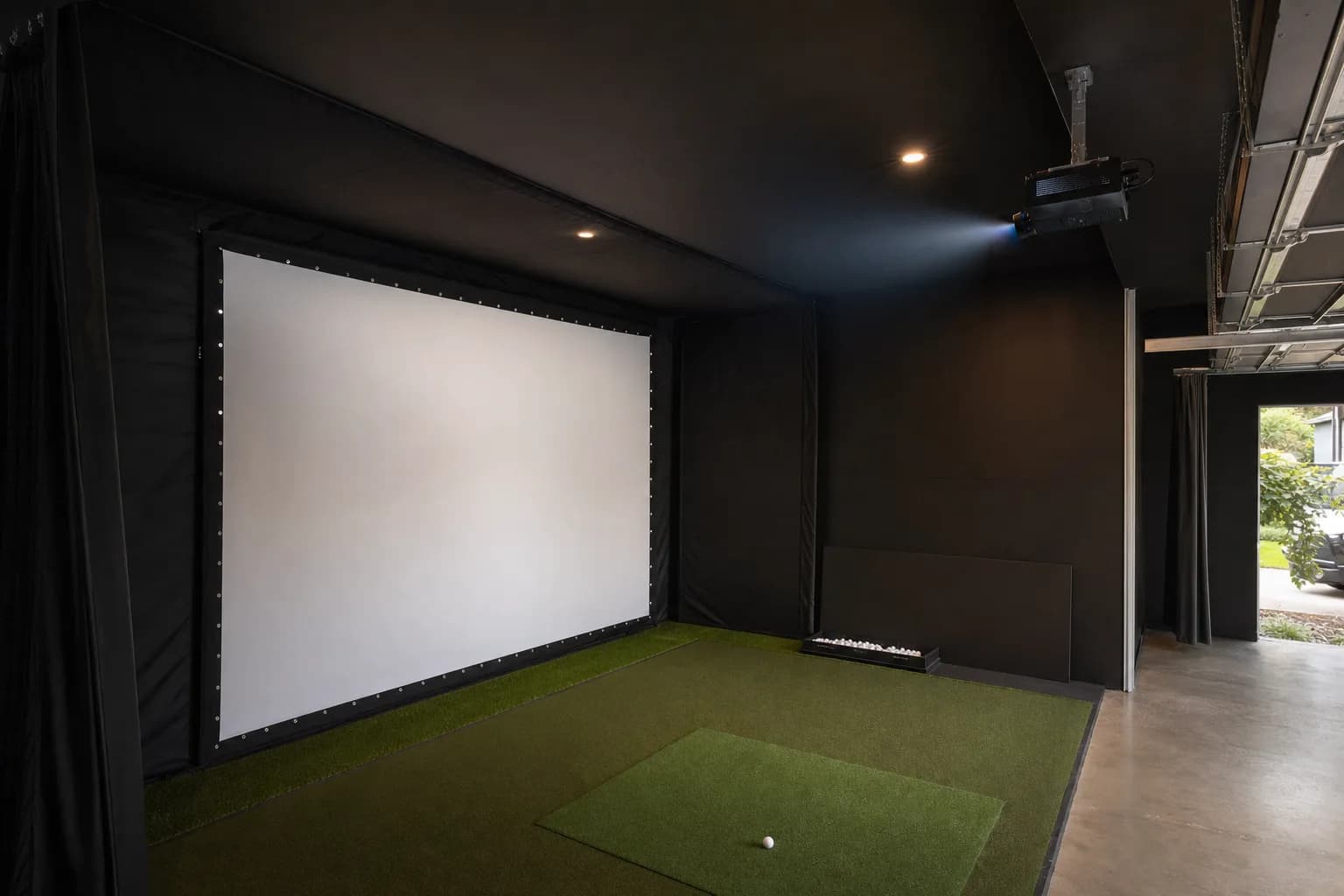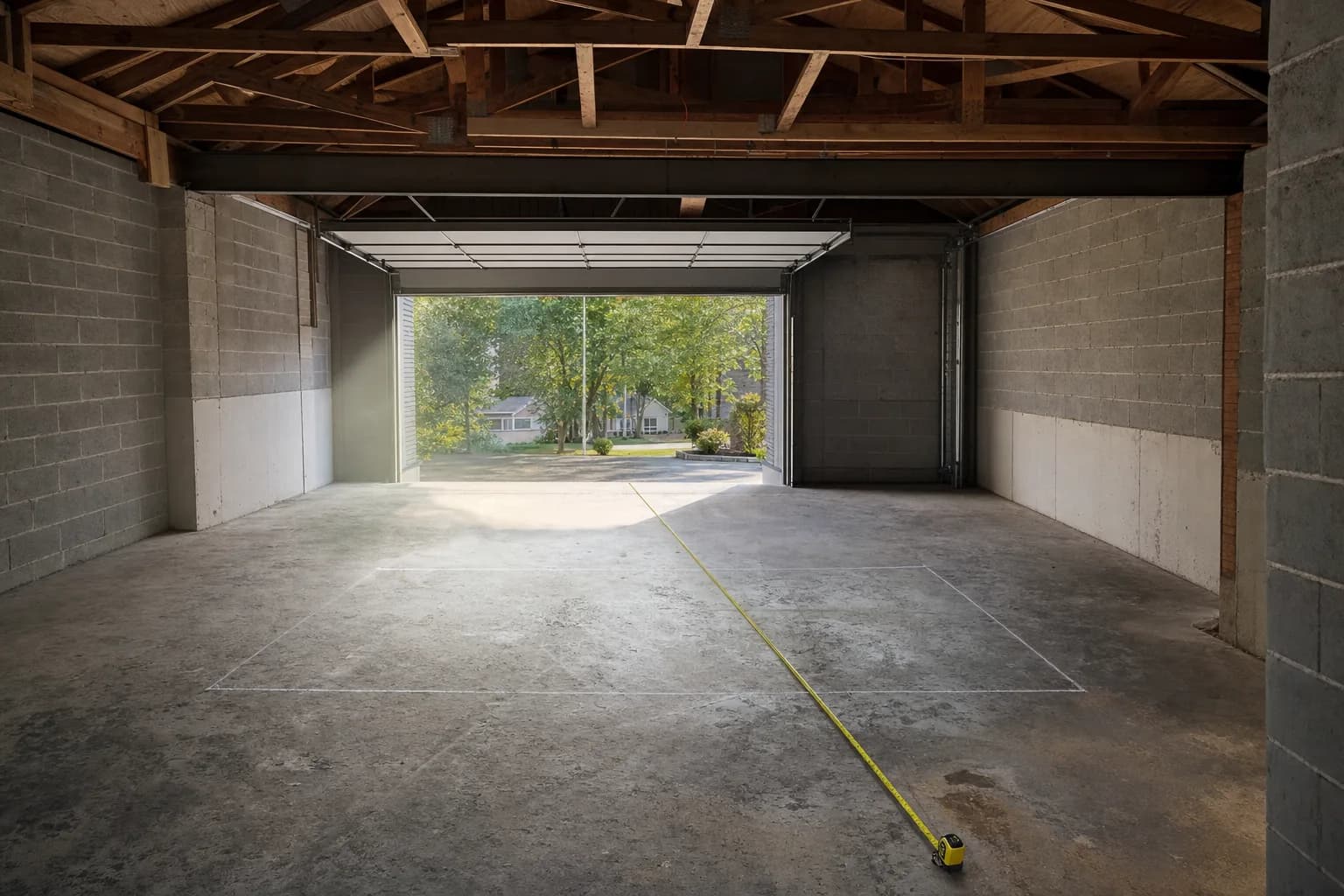

Why a single number is misleading
A room that measures wide enough on paper can still be too short for your swing. A room that looks tight on paper can work fine with the right launch monitor. Three things actually determine whether a space works: ceiling height, how much clearance your swing needs, and how much room your launch monitor needs to read the ball. Any guide that gives you one universal minimum is skipping past all three.
Garage, basement, or spare room: what each one gets you and costs you
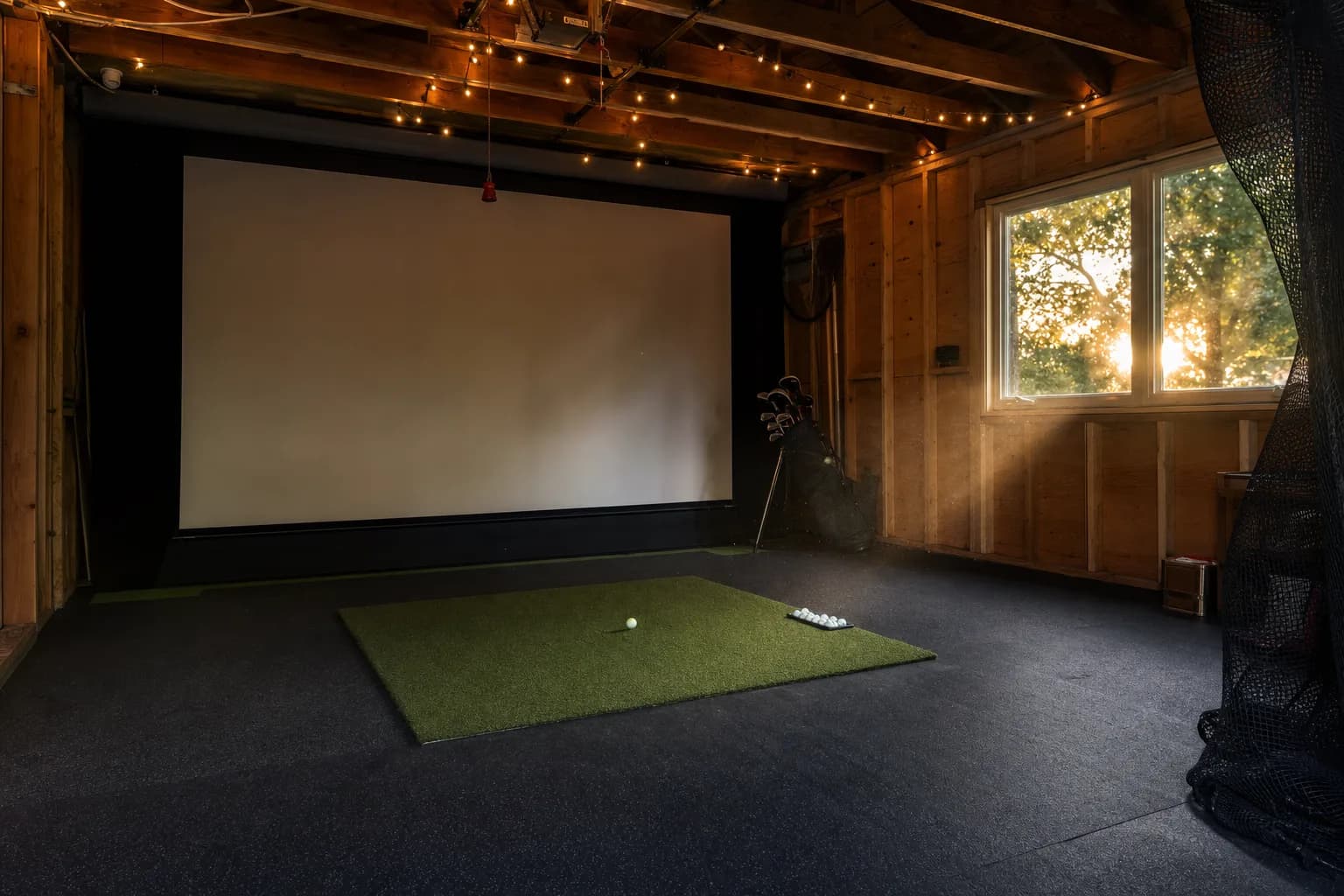
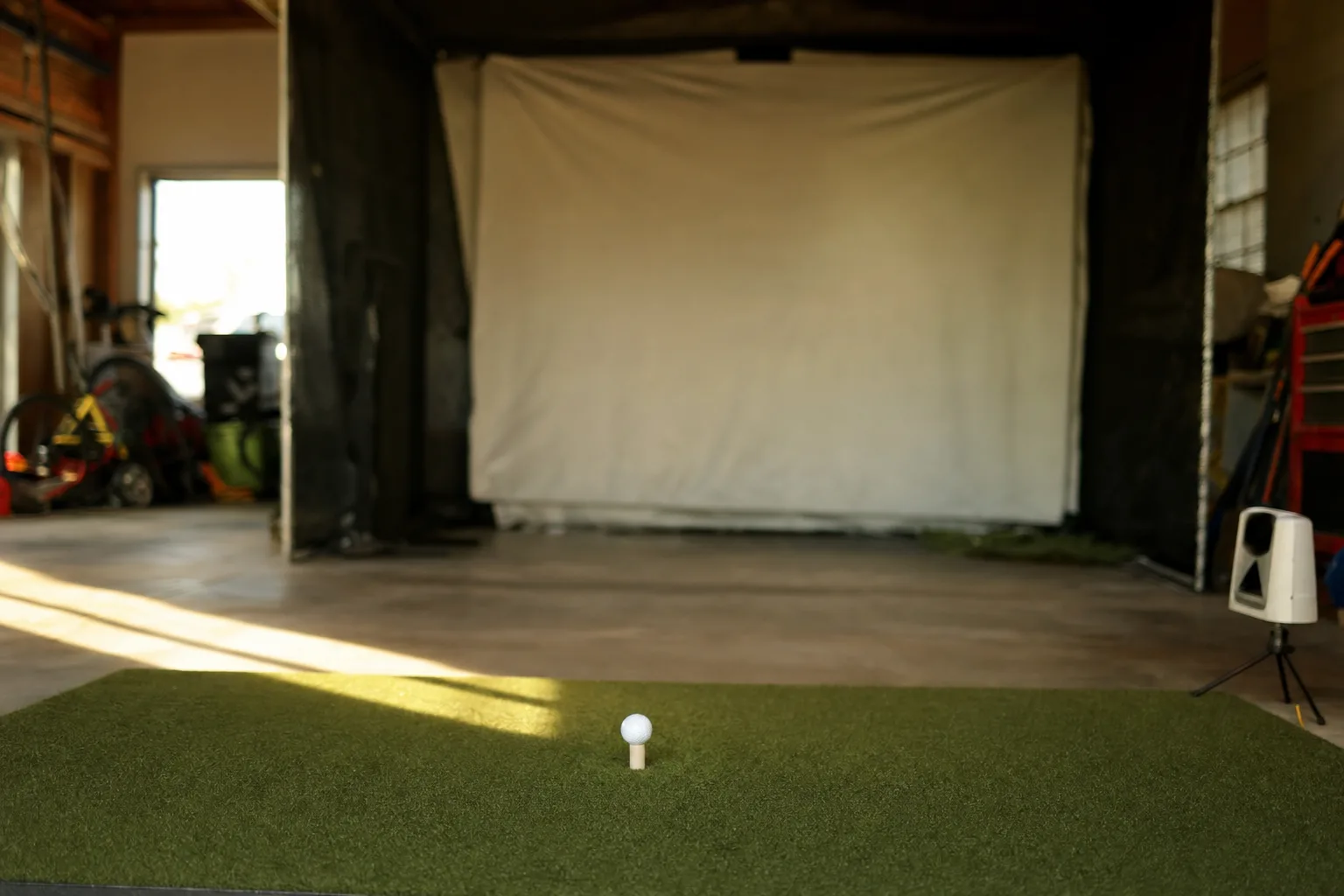
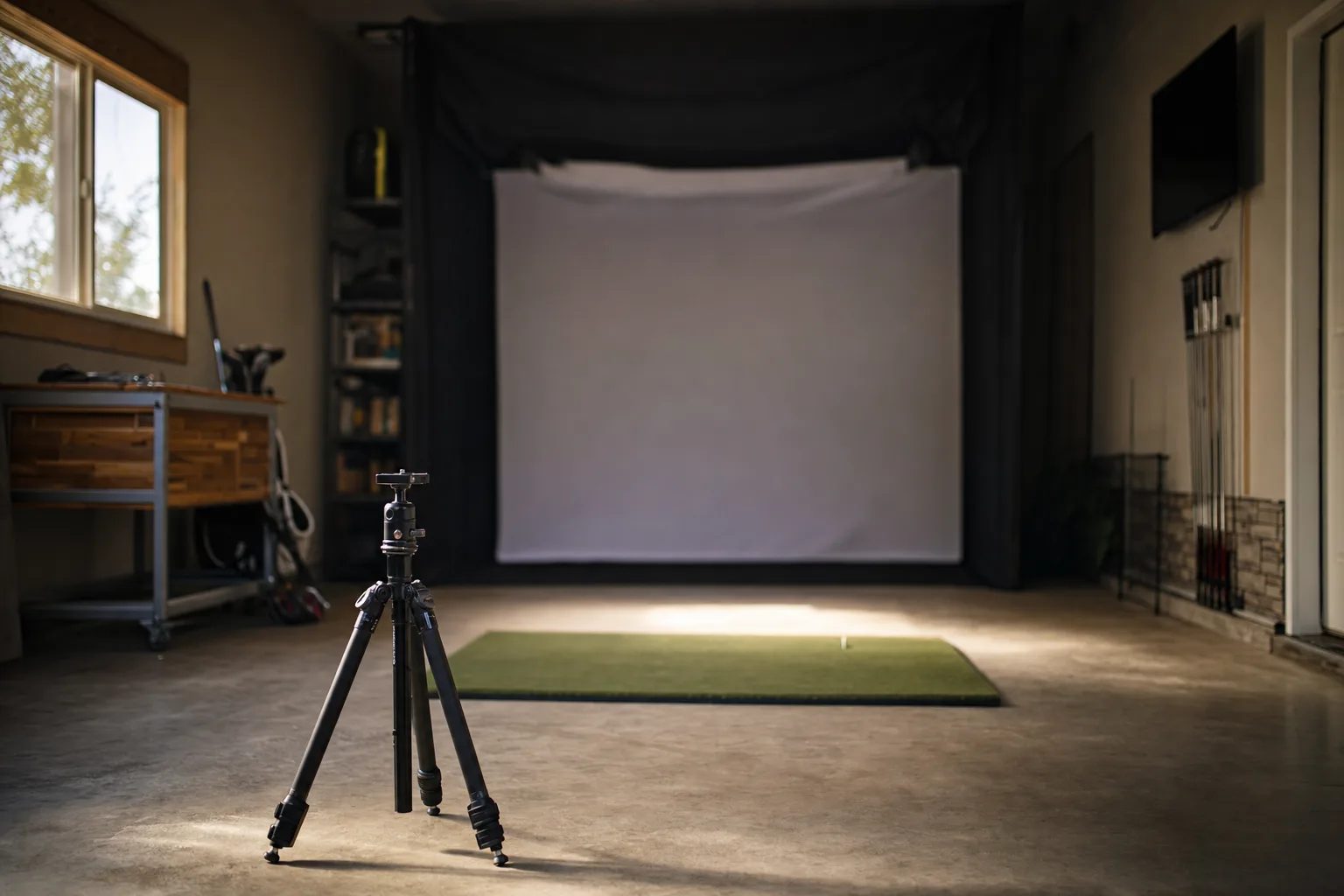
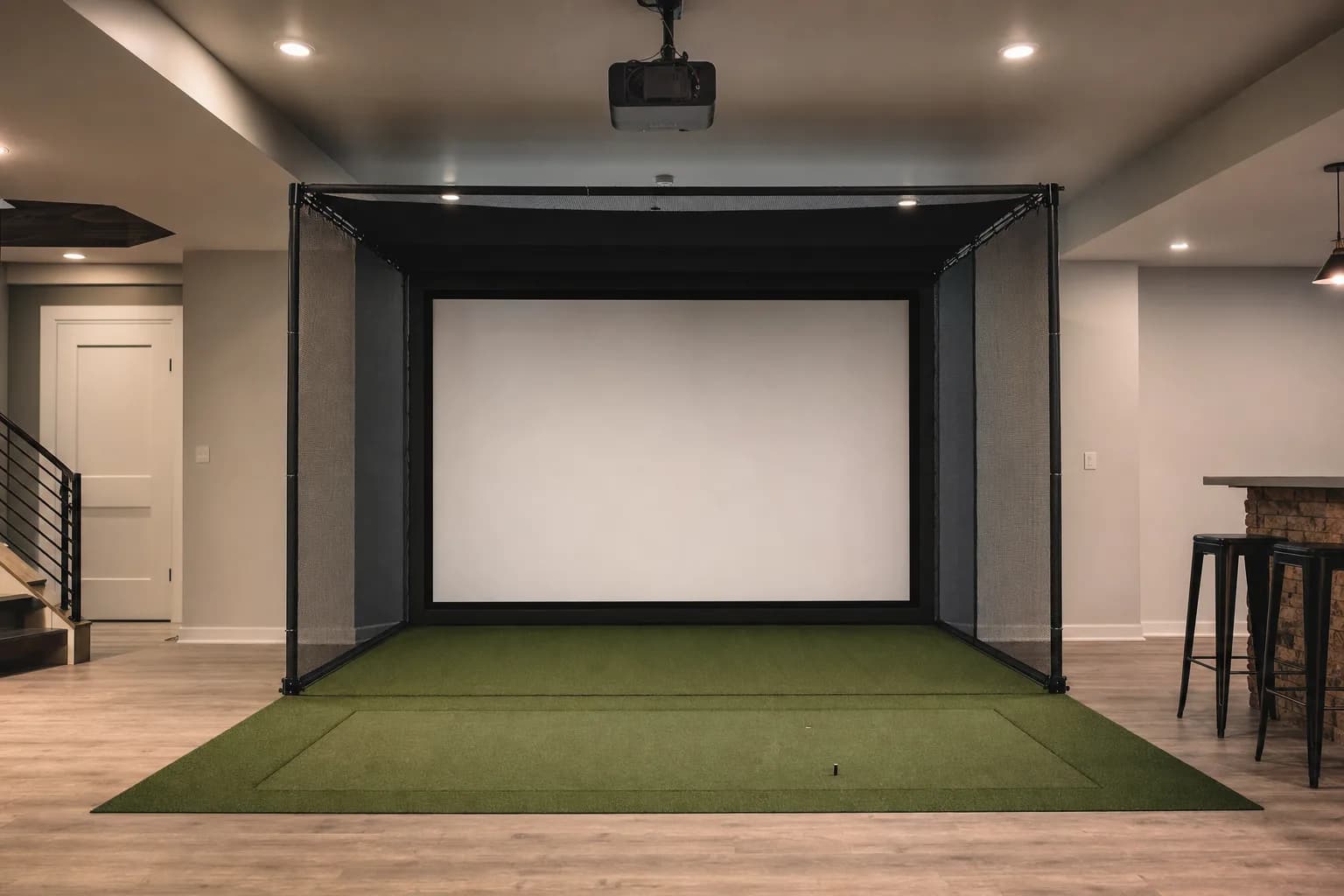
Most home simulators end up in one of three spaces, and each comes with a different set of tradeoffs before you've bought a single piece of equipment. None of these is universally the right answer. What matters is which constraints you can live with.
| Space | What usually works in your favor | What usually works against you |
|---|---|---|
| Garage bay | Often the tallest, deepest space in the house; concrete floor tolerates a mat without special prep; separated from living space, so noise and mishit balls matter less | Garage door track and opener hardware can eat into real ceiling height at the front of the bay; unfinished walls need protection from stray shots; often unheated or uninsulated, which affects comfort and electronics in extreme climates |
| Basement | Naturally enclosed and insulated from weather; usually has a finished or semi-finished floor already; less exposed to temperature swings | Ceiling height is the most common dealbreaker here, ductwork, pipes, and support beams frequently sit right in the swing path; moisture and humidity can be a real concern for electronics |
| Spare bedroom or bonus room | Finished, climate-controlled, usually already wired for power; comfortable to spend time in | Typically the shortest ceiling of the three, standard residential ceilings run 8 to 9 feet; walls and flooring are the ones you actually live with, so damage risk matters more |
If you have a choice between more than one of these spaces, ceiling height should usually be the deciding factor, since it's the one constraint equipment and setup adjustments can't fully compensate for.
Ceiling height
This is the one constraint you can't fix after buying equipment. A launch monitor can be returned; a ceiling can't be raised.
Across manufacturer and installer guidance, the minimum most often cited is around 8.5 to 9 feet, with 10 feet or more recommended for a comfortable full swing. Taller golfers, or anyone with a longer, more upright swing plane, need more. A three-quarter backswing (hands roughly at shoulder height instead of fully overhead) needs meaningfully less overhead room than a full swing, which is why some low-ceiling setups work with a swing adjustment that a strict number wouldn't capture.
The club matters as much as the swing. A driver is the longest club in the bag, commonly around 45 inches, and produces the widest, highest swing arc of anything you'll hit. Wedges and short irons, by comparison, have a flatter, more compact arc and clear a lower ceiling with room to spare. If your ceiling is genuinely borderline, it's worth thinking about whether you're building a full-bag simulator or mainly an iron and wedge practice space, since the answer changes what "enough" ceiling height actually means for you.
These are common ranges from simulator manufacturers and installers, not measurements MyGolfSim has independently tested against its own catalog. Treat them as a starting point, and check the specific launch monitor and enclosure you're considering for their own stated clearance requirements.
Width
Width is about swing arc, not just standing room. A driver swing needs clearance on both sides of the ball, more on your follow-through side. If more than one person will use the bay, and they don't all swing the same handedness, plan clearance for both sides rather than just the one you tested with.
Most workable setups fall somewhere in the 10 to 15 foot range: narrower if you're consistently hitting shorter clubs from a fixed, centered position, wider if the bay needs to comfortably fit left and right-handed golfers without moving equipment.
Depth
Depth is where launch monitor choice matters most. Radar-based units sit behind you and need enough room to track the ball's flight before it reaches the screen, often 8 to 10 feet of clearance behind the ball plus flight distance to the impact surface. Camera-based units sit beside or just in front of the hitting position and read the ball at impact, so they need far less runway, which is why they tend to be the easier fit in a shorter room.
See the launch monitor selection guide for how radar and camera-based units differSee the launch monitors currently in the catalog
Total depth also includes the distance from the hitting position to your screen or net, typically another 10 to 14 feet so the ball has room to display a realistic flight before impact.
| Behind the hitting position | Typically the easier fit in a short room | |
|---|---|---|
| Radar-based launch monitor | 8 to 10 feet to get a clean read on the ball's early flight | No, needs the most total depth |
| Camera-based launch monitor | Little to none, most read the ball at or near impact | Yes, the better default choice for a short or narrow room |
General ranges from manufacturer and installer guidance, not independently measured by MyGolfSim. Confirm against the specific unit you're considering.
Flooring and impact protection
A concrete garage floor tolerates a hitting mat directly on top of it without extra prep. Wood subfloors, especially in a basement or spare room over living space below, are a different story: repeated impact from full swings transmits through the floor as both vibration and sound, which matters if anyone lives or works underneath the room you're using.
- A hitting mat is not optional even on top of carpet, since carpet alone doesn't replicate turf interaction and doesn't protect the subfloor from a mishit or a club that digs
- An underlayment pad beneath the mat reduces both the impact noise transmitted downward and the fatigue of standing on a hard surface for a long session
- If the space is shared with a finished ceiling below, ask before you build whether that ceiling can tolerate repeated impact, not just whether the floor above looks fine
Lighting
This matters more than most first-time builders expect, and it's specific to which kind of launch monitor you're using. Camera-based units rely on consistent, even lighting to track the ball accurately: harsh shadows, a bright window directly behind the hitting position, or light that changes throughout the day (a garage bay with the door open, for example) can degrade read consistency. Radar-based units are less sensitive to lighting conditions specifically, but still benefit from a well-lit room for basic visibility and camera-based overlay features many units also include.
A practical target: even, diffuse light across the hitting area, no direct sunlight or bright window in the camera's field of view, and lighting that doesn't meaningfully change between a morning and evening session.
Electrical and connectivity
A simulator setup is more of a small electronics installation than most people plan for going in. A launch monitor, a projector or TV, a PC or game console running simulator software, and often a fan or heater for comfort during long sessions all need power, and not always from the same side of the room.
- Plan for at least one dedicated outlet near the hitting position and another near the screen or projector, rather than running an extension cord across the swing path
- If the simulator software runs on a PC, a wired ethernet connection is more reliable than Wi-Fi for consistent performance, especially in a garage or basement where wireless signal is often weaker
- Cable management matters for safety as much as looks: a cord crossing the floor near where you're swinging or walking through your follow-through is a real trip hazard, not just clutter
Hitting position and clearance
Beyond the raw dimensions, think about where you'll actually stand. Leave real clearance behind and to the sides of the hitting position for a full follow-through, not just enough room to address the ball. If a launch monitor mounts overhead or sits close to the swing path, confirm its clearance requirements specifically. Anything in the swing path (support beams, HVAC ducts, light fixtures) counts against your usable ceiling height even if the room's raw measurement looks fine.
Left and right-handed golfers sharing a bay
If more than one golfer will use the same setup and they swing different directions, the bay needs mirrored clearance on both sides, not just extra width on one side. This usually means giving up some of the margin you'd otherwise use to tighten the room.
If your room is genuinely tight
A camera-based launch monitor needs less depth than a radar-based one. A three-quarter swing needs less ceiling height than a full one. Hitting into a net instead of an impact screen removes the enclosure and frame from your space budget entirely. None of these are compromises you have to accept forever, they're just the levers that make a tight room workable now.
A few specific, common problems and the actual fix for each:
- The garage door track cuts into ceiling height at the front of the bay: move the hitting position further back into the bay, past where the track hardware hangs down, rather than trying to work around it
- Ductwork or a support beam sits directly in the swing path: measure clearance at that specific point, not just the room's overall ceiling height, and consider a slightly angled hitting position that swings around the obstruction
- You have 9 feet of depth and want a radar-based unit: either switch to a camera-based unit, which needs little to no room behind the ball, or accept a shorter screen distance and a less immersive ball flight
- The room is wide enough but too short front-to-back: hitting into a net instead of an impact screen usually saves more depth than any other single change, since it removes both the screen's standoff distance and the enclosure frame
For a genuinely short room, a photometric (camera-based) launch monitor is the single most effective change, because it reads the ball at impact instead of tracking its flight and needs almost no depth behind the ball.
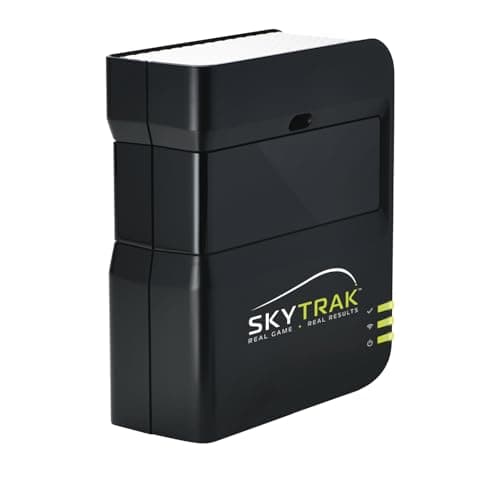
The photometric unit I point people toward when depth is the constraint. It reads the ball at impact, so it works in a bay a radar unit cannot, and it still gives realistic ball flight and spin. The launch monitor roundup covers the Uneekor EYE MINI and Bushnell Launch Pro above it if the budget stretches.
See the best golf launch monitors roundup, which is organised by room size, and the best home golf simulator guide for how a tight room shapes the whole build.
Common questions
Do I need a professional to measure my space before buying anything? No, for most rooms a tape measure and this guide's ranges are enough to know whether you're in the right ballpark. A professional install matters more once you're committing to a permanent enclosure, not for the initial "will this room work at all" question.
Will my neighbors or family hear every shot? Impact noise depends more on your flooring and mat setup than on the room itself, see the flooring section above. A dedicated mat with a real underlayment pad, on a ground-floor concrete slab, is about as quiet as this gets. A wood floor over a shared living space, with no underlayment, is the loudest realistic setup.
Can I use a room with a window facing the hitting area? You can, but expect it to affect a camera-based launch monitor's consistency more than a radar-based one, see the lighting section above. Curtains or blinds that let you control the light are a simple, cheap fix if the window itself isn't going anywhere.
Does an enclosure need more room than just hitting into a net? Yes, generally. An enclosure's frame and impact screen both take up real depth and width beyond the swing space itself, which is exactly why a net is the space-saving option when a room is genuinely tight.
Next steps
Once you know your room works, or which compromises you're making to fit it, the launch monitor is usually the next real decision.
Back to the full planning guide