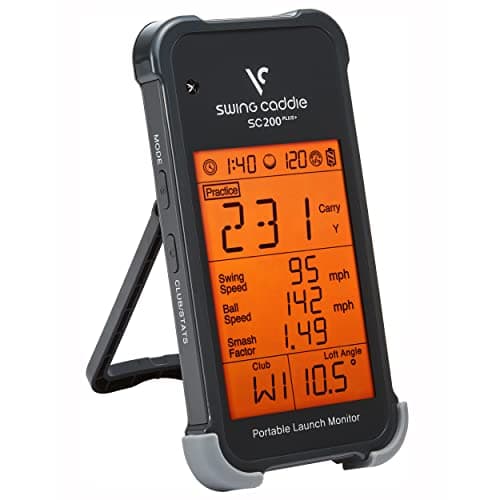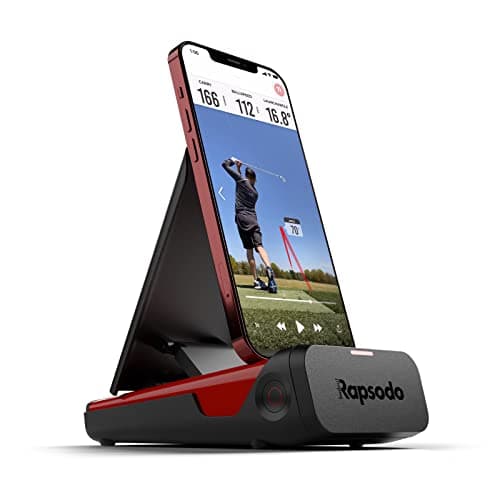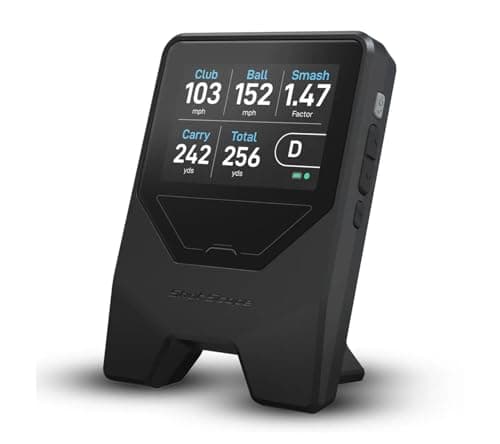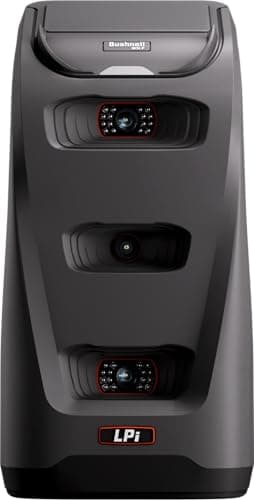

Detailed Overview
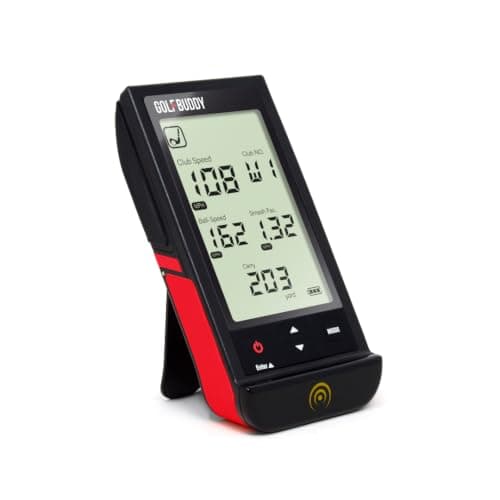
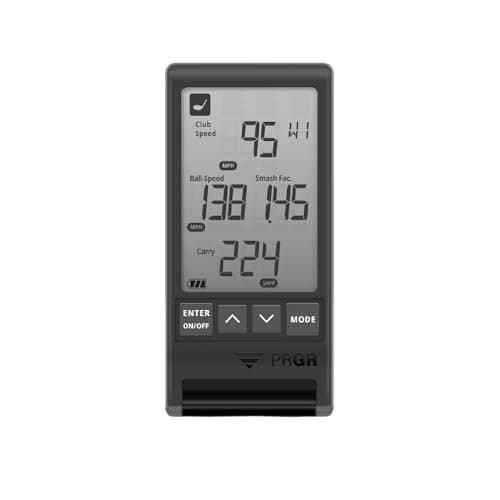
Positioned within a broader home simulator setup, this unit works best as a supporting device rather than the centerpiece of the system. Because it delivers its core speed data at a fraction of the cost of a full launch monitor, it makes sense as an entry point for golfers building out a hitting bay incrementally, adding it to a mat and net before committing to pricier simulator software or a camera-based unit. It sits behind the ball on the mat, independent of any screen or projector, so it can run alongside an existing simulator setup as a secondary speed check or be used on its own in a garage or basement practice space. One practical consideration for anyone integrating it into a simulator room: placement matters. Distance behind the ball, height relative to the mat, and angle all affect reading consistency, so it needs a bit of trial and error to dial in within whatever hitting area you've built, especially in tighter spaces where net position and mat placement are already fixed. Once positioned correctly, it becomes a low-maintenance addition to the setup rather than something you have to fuss over each session.
Specifications Explained
For a home simulator setup, that size and weight translate directly into where and how easily you can position it. A unit this compact slips into a bag pocket without adding noticeable bulk, and it's light enough that mounting or placing it near your hitting area doesn't require dedicated hardware or a permanent spot in your setup. That matters if you're working in a garage, basement, or shared space where gear gets packed away between sessions. The black finish is purely cosmetic and won't affect performance. Beyond dimensions and weight, the supplied specifications don't cover data output, connectivity, or measurement capability, so anything about accuracy or the range of metrics it captures falls outside what these particular numbers can tell you.
Real-World Considerations
In practice, most feedback centers on what the HS-130A does well and what it simply doesn't attempt. The recurring pattern across reviews is that people accept its narrow focus: speed data in, speed data out. Nobody expects launch angle, spin, shot shape, or dispersion numbers from it, and several sources point out plainly that those metrics aren't part of the package, so anyone hoping for simulator-style feedback or club fitting detail will be disappointed. A second pattern worth flagging is around the distance numbers it does show: carry and total yardage are calculated estimates built from speed readings and assumed conditions, not tracked ball flight, so treat them as a rough guide rather than what you'd see on course. There's also a smaller but notable thread of skepticism in forum discussions, with some users viewing it as one of many similar single-radar speed gadgets rather than something distinctive. Sentiment here is mixed enough that it's worth weighing against your own priorities before buying.
Alternatives Worth Considering
The honest alternative path depends on what you actually need from a launch monitor. If you want spin rate, launch angle, shot shape, dispersion, or video overlay, this device isn't the right category: you'd be looking at a full simulator or camera-based unit, which costs considerably more and demands app setup, calibration, and often a subscription. That's a real trade-off, not a flaw, since this tool trades that depth for simplicity and a lower price point. If your goal is purely speed training, tempo work, or tracking swing progress without screens or software, sticking with a simple radar unit like this makes sense. I don't have verified data here on specific competing radar models or their pricing, so I can't responsibly compare this against named rivals in that budget tier. Choose based on whether you need raw speed feedback or full ball-flight analysis.
Buying Advice
The HS-130A makes sense if you want fast, honest speed feedback (club speed, ball speed, tempo) without fussing with an app, Wi-Fi, or pairing, and you're fine tracking that data as a training aid rather than a fitting tool. It's a reasonable pick for someone who practices at home or the range and just wants a number to chase. Where it falls short is anyone hoping for launch angle, spin, shot shape, or dispersion, that's simply outside what a single-radar device like this can do. If your goal is gapping clubs, dialing in ball flight, or running simulator software, look at something in the Rapsodo or full launch-monitor category instead. Also budget a few minutes to get placement and angle right behind the ball, since sloppy setup is the most common source of bad readings.
Considering it? Check the price of PRGR HS 130-A Portable Golf Launch Monitor | Doppler Radar Measures Club & Ball Speed, Smash Factor, Total & Carry Distance | Tracks Swing Speed Training Aids
$199.99 on Amazon
Frequently Asked Questions
Does the PRGR HS-130A need an app or Wi-Fi to work?
No. It runs as a standalone radar unit, so there's no pairing, no subscription, and no phone needed just to get a swing speed reading.
How accurate is it for clubhead and ball speed?
Reports suggest readings often land within roughly a mile per hour of pricier radar-based devices, though results depend heavily on getting the setup right and this hasn't been independently verified across every swing type or condition.
Is it simple to set up and use?
For basic speed work, yes, it's about as low-friction as this category gets. That said, placement matters: distance behind the ball, height, and angle relative to your mat or turf all need to be reasonably consistent, or you risk a missed read or a number that looks off.
Can it replace a full simulator?
No. It doesn't capture launch angle, spin, shot shape, or dispersion, so treat it as a speed and estimated-distance tool for practice rather than a simulator substitute.
What about price and availability?
Check current Amazon listings directly, since pricing and stock status can shift and shouldn't be assumed from older information.
Editorial Verdict
For golfers who mainly want honest feedback on clubhead speed and ball speed, the HS-130A earns its keep. Reviewers consistently point to its accuracy on those two metrics, its pocket-sized simplicity, and its price as reasons it works well for tempo and speed training without apps, subscriptions, or a simulator setup. The tradeoff is real: carry and total distance are estimates that can run optimistic, and there's no launch angle, spin, shot shape, or dispersion data, so fitters and golfers chasing detailed ball-flight analysis should look at pricier launch monitors instead. As a no-frills speed trainer, though, it delivers solid value for what it promises.