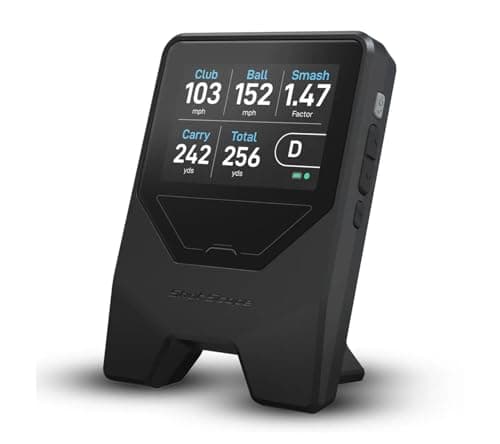

Detailed Overview
It sits a few feet behind the ball, reads clubhead and ball data on contact, and hands you the numbers that matter for practice, without trying to replicate the full graphical experience of a projector-and-screen simulator. That distinction matters when planning a system: if you want ball flight rendered on a virtual course, you'll still need separate simulation software and a launch monitor that feeds it richer flight data. It's built to sit alongside your existing net or mat setup and give you honest speed and distance feedback shot after shot.
Where it earns its place in a broader system is the app connection, which logs sessions over time so you can track trends rather than just glancing at a single number and forgetting it. That said, some users have run into syncing hiccups between the device and the app, so don't expect the data pipeline to be flawless every session. If your simulator ambitions are modest, mainly wanting real swing and impact numbers without chasing full course simulation, it slots in as a straightforward data layer rather than the centerpiece of the room.
Specifications Explained
The core spec sheet here is short, and that's the point. At roughly 12 by 8 by 8 inches and just under a pound and a half, the LM1 is small enough to live in a golf bag or a shelf near a simulator screen without eating up space, and light enough that carrying it to the range doesn't feel like extra baggage. That compact footprint matters more than it sounds: home setups are often cramped, and a bulky unit becomes a hassle to reposition every session. The single-unit design (one item, in black) also keeps setup simple, no separate components to track or misplace. Beyond the physical dimensions, reviewers describe the LM1 as focused on the core numbers golfers actually check in practice, club speed, ball speed, smash factor, and carry and total distance, rather than piling on extras. Some note it holds up well for mid-irons and wedges but drifts more on driver carry, and that it doesn't dig into shot shape or spin detail. Those are worth weighing against your specific practice goals before buying.
Real-World Considerations
Community feedback consistently draws a line between what the LM1 does well and where it hits its ceiling. Golfers looking for shot-shape detail, such as curvature, dispersion patterns, or deeper spin data, will find the unit doesn't go that far: it sticks to core numbers rather than the kind of ball-flight breakdown a fitting session would require. That's a deliberate tradeoff reviewers generally accept given the price point, but it's worth knowing going in if you're chasing a full diagnostic picture of your swing.
The other pattern worth flagging comes from a single detailed comparison against a pricier launch monitor, which found driver carry distances running long by roughly 11 yards on average. That's not broad consensus across every review, so treat it as a documented caveat rather than a universal rule, but it does suggest the LM1's numbers deserve more scrutiny at the long end of the bag than with mid irons or wedges, where agreement with premium units is tighter.
Alternatives Worth Considering
The research here doesn't include head-to-head specs on named competitors, so we can't point you to a specific rival model with confidence. If you want detailed shot-shape data, spin curvature, or dispersion patterns for club fitting, this unit won't get you there, so a pricier system built around ball-flight analysis is the better fit. Likewise, if your goal is a full home simulator experience with course play and graphics, look elsewhere: this is a metrics tool, not an immersive setup.
Buying Advice
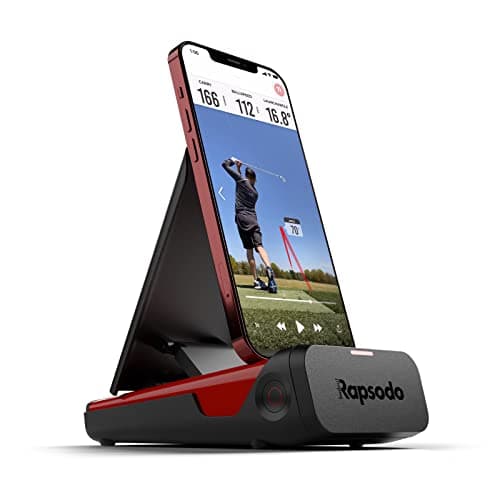
The LM1 makes sense if you want straightforward speed and distance numbers for range sessions without paying a subscription on top of the hardware, at 199.99 dollars. If your priority is mid irons and wedges, the reported closeness to pricier units in that range is worth weighing, though some users describe driver carry running long and a few have called the unit unreliable, so don't treat any single account as the full picture. If you need shot shape, curvature, or dispersion data for fitting work, this isn't built for that and you'll want to look elsewhere. Golfers who want a point of comparison in the same practice-tool category should also check out a Rapsodo launch monitor before deciding. Skip the LM1 if tour-level driver precision is your main requirement.
Considering it? Check the price of Shot Scope LM1 Portable Mini Launch Monitor
$199.99 on Amazon
Frequently Asked Questions
How accurate is the Shot Scope LM1 compared to higher-end launch monitors like GCQuad, FlightScope Mevo, or SkyTrak+?
For mid irons and wedges, several reviewers report the LM1's numbers land close to what pricier units produce, which is solid for something at this price.
How easy is it to set up and use the Shot Scope LM1?
The unit is compact, light, and comes with a carry case, and reviewers describe getting it running for range or course sessions without a fussy setup process. It also runs with no subscription fees, so there's no account creation or recurring cost between unboxing and your first swing.
Are there any reports of the Shot Scope LM1 being unreliable or 'unusable' for some users?
There's no evidence of widespread failures or the device being unusable, but it does have real limits. Indoor readings are described as less consistent than outdoor ones, particularly on shots with a lot of curve, and carry distances are calculated on a sea-level assumption, so golfers at higher elevations may see numbers that don't match real-world conditions.
Editorial Verdict
Weigh it all up and the LM1 earns its keep as a budget tool for golfers who want honest feedback on speed and distance without fuss. Reviewers point to strong value and solid agreement with pricier units on mid irons and wedges, plus a compact, grab-and-go design that suits range sessions and quick practice. It's not built for deep fitting work: there's no shot-shape or spin detail, and driver carry numbers run noticeably long compared to premium monitors. For recreational players chasing better distance control and swing speed awareness, it's a sensible pick. Anyone needing detailed dispersion data or precise driver numbers should look toward a more advanced, and pricier, system.